Handmade jewelry deserves care that fits its materials and construction. A few simple habits can help prevent scratches, bent parts, tangled chains, and tarnish—without complicated tools or routines. The best approach is to protect pieces from moisture and chemicals, store them separately, and clean them gently when needed. Because metals, stones, and finishes vary, check any care instructions from the maker before trying a new cleaning method. When in doubt, start with the gentlest option.
Store Each Piece Separately
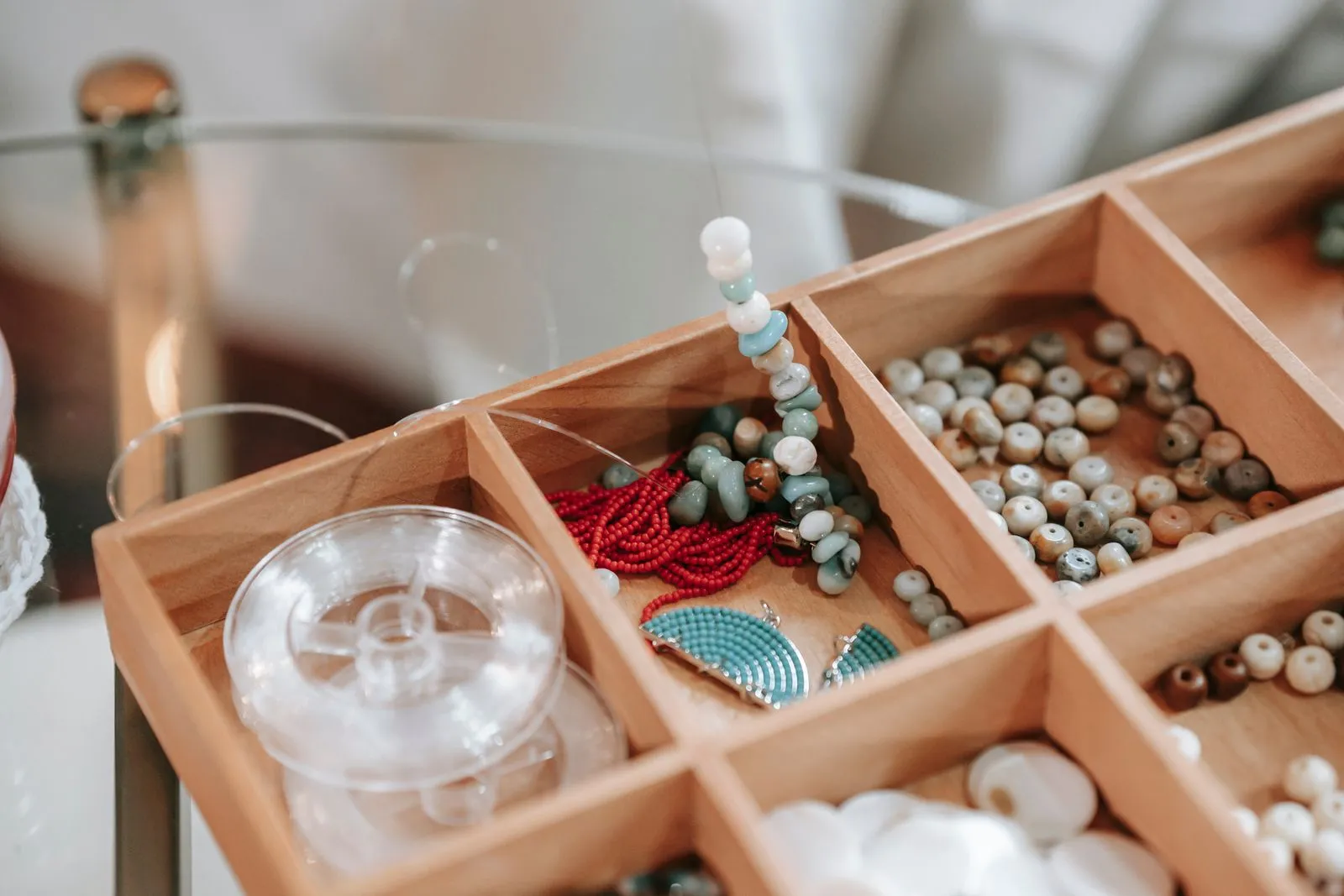
Keep jewelry in a dry place, away from direct sunlight and steamy bathrooms. Store each piece in its own soft pouch or compartment to reduce scratches and prevent chains from knotting. A lined jewelry box works well, while a small sealed bag can help limit air exposure for pieces that tarnish easily. Make sure jewelry is completely dry before putting it away.
Fasten necklaces and bracelets before storing them so clasps do not snag on other pieces. Lay delicate chains flat when possible, and avoid hanging heavy items if their weight could stretch a chain or stress a clasp. Keep earrings together as pairs in a small compartment. If a piece has a fragile stone setting or an unusual shape, give it extra room rather than squeezing it into a crowded box.
Clean Gently and Carefully
For routine cleaning, wipe jewelry with a clean, soft, lint-free cloth after wearing it. This removes skin oils and surface residue before they build up. If the piece needs more attention, use a little lukewarm water and mild soap only when its materials can safely handle moisture. Rinse carefully, then pat it dry with a soft cloth and let it air-dry fully before storage.
Avoid abrasive cleaners, rough cloths, toothpaste, and household chemicals. They can scratch metal, dull a finish, or damage delicate stones and coatings. Ultrasonic cleaners and polishing dips are not suitable for every piece, so do not use them unless the maker confirms they are safe for that specific jewelry. When you are unsure about a material or setting, ask the maker for care guidance.
Protect Jewelry While Wearing It
Put jewelry on after applying lotion, sunscreen, perfume, or hair products, and let those products dry first. Remove pieces before swimming, showering, exercising, gardening, or doing chores that involve cleaners. Water, sweat, chemicals, and friction can affect metals and finishes, while knocks may loosen settings or bend delicate components.
Pay attention to how a piece feels during wear. If a clasp catches, a stone moves, or a wire looks bent, stop wearing it until it can be checked. Avoid pulling on tangled chains; work through knots slowly with your fingers on a flat surface. Small, careful adjustments are safer than tugging, which can stretch links or weaken handmade connections.
Match Care to the Materials
Jewelry can combine metals, gemstones, beads, pearls, or surface treatments, and each may need different care. A cleaning method that suits solid metal could harm a porous stone, a plated finish, or a glued component. Follow any instructions that came with the piece, and do not assume that all jewelry labeled with the same metal can be cleaned the same way.
Tarnish can often be slowed by keeping jewelry dry, limiting exposure to air and chemicals, and wiping pieces after use. If tarnish appears, choose a cleaning approach made for the specific material and test cautiously in an inconspicuous spot when appropriate. For valuable, delicate, or structurally damaged pieces, consult the maker or a qualified jeweler instead of attempting a repair at home.
A dry storage spot, separate compartments, gentle wiping, and mindful wear can make handmade jewelry easier to enjoy for years. Check care instructions and consider the materials before cleaning, especially when a piece combines stones, coatings, or delicate settings. For a piece that needs special attention, ask its maker for a suitable care recommendation.